Restoration engineered to your facility's operational reality.
Large-format commercial, regulated medical, continuous-process industrial—each environment carries constraints that demand a distinct restoration sequence. From identifying clean-outs and pipe runs to choosing upstream or downstream scouring maneuvers, we quantify the restoration volume required to meet original factory specifications.


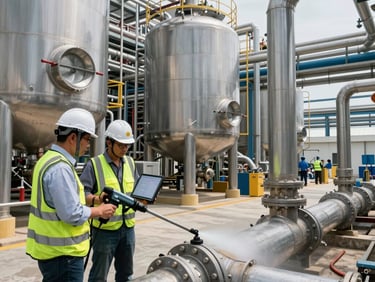
Each sector. Distinct parameters.
Malls, retail centers, mixed-use
Clinics, hospitals, surgical centers
Manufacturing, processing, distribution
Phased zone access and tenant continuity define the sequencing. We identify clean-outs and pipe runs during our technical walk-through to ensure restoration proceeds without corridor closure or lease disruption—eliminating the risk of flooding in high-traffic areas.
Continuous-process environments carry high-volume, chemically complex drain loads. Unplanned downtime has direct production costs—restoration is scheduled to the hour. Our mud-sucker induced stress test provides documented proof that your industrial infrastructure has returned to original factory specifications.
Infection control protocols and 24/7 operational mandates require a strategic restoration sequence. By deciding on upstream or downstream scouring maneuvers before we begin, we ensure critical facility functions are never interrupted. Completion is verified via a Volumetric Water Test to confirm 100% capacity.
No generic protocol. Sequencing built to your system.
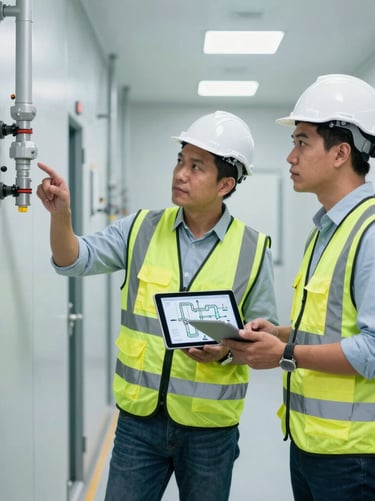
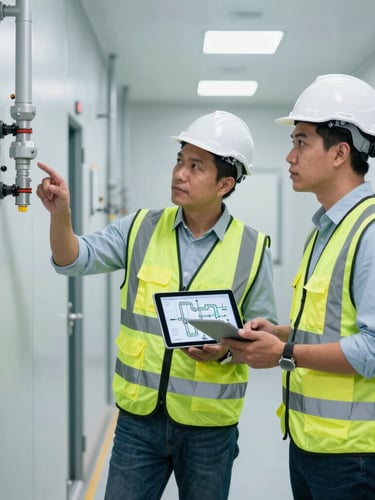
Drainage infrastructure in a surgical suite operates under different regulatory, material, and access constraints than a mall’s sub-slab system. Our restoration sequencing reflects these specifics—quantifying diameter targets, identifying clean-outs, and mapping pipe runs during a joint technical walk-through with your facility team. By defining these parameters before a single nozzle enters the line, we ensure a surgical intervention that concludes with a verified Volumetric Water Test.
Know your system's actual condition before committing to a path.
We perform a Technical Site Assessment to quantify restoration volume and map critical infrastructure—clean-outs, pipe runs, and waste chambers—before any work begins. By establishing these hard specifications first, we ensure a calculated restoration that returns your asset to its original factory specifications without the risk of flooding.